A Simple Daily Language Routine for Families (Free Monthly Language Calendar)
Supporting communication at home is one of the most important parts of speech therapy. But many families aren’t sure what to do between sessions. They want to help, they just need something simple and clear.
That’s why I created free Language Calendars you can send home with families. Each day includes a quick, easy idea to support communication during everyday routines.
This low-prep tool helps therapists increase carryover while giving parents realistic ways to support language development at home.
Download the free Language Calendars here and start using them with your kids this week.
Why These Calendars Are Special
You might see a free calendar handout at your local library. Maybe a neighborhood preschool sends them home with kids.
These calendars are different.
They contain a variety of language-based activities at three different levels, incorporate early first words, include sign language visuals, and are available in both English and Spanish.
Before I get ahead of myself, I’ll tell you how they started.
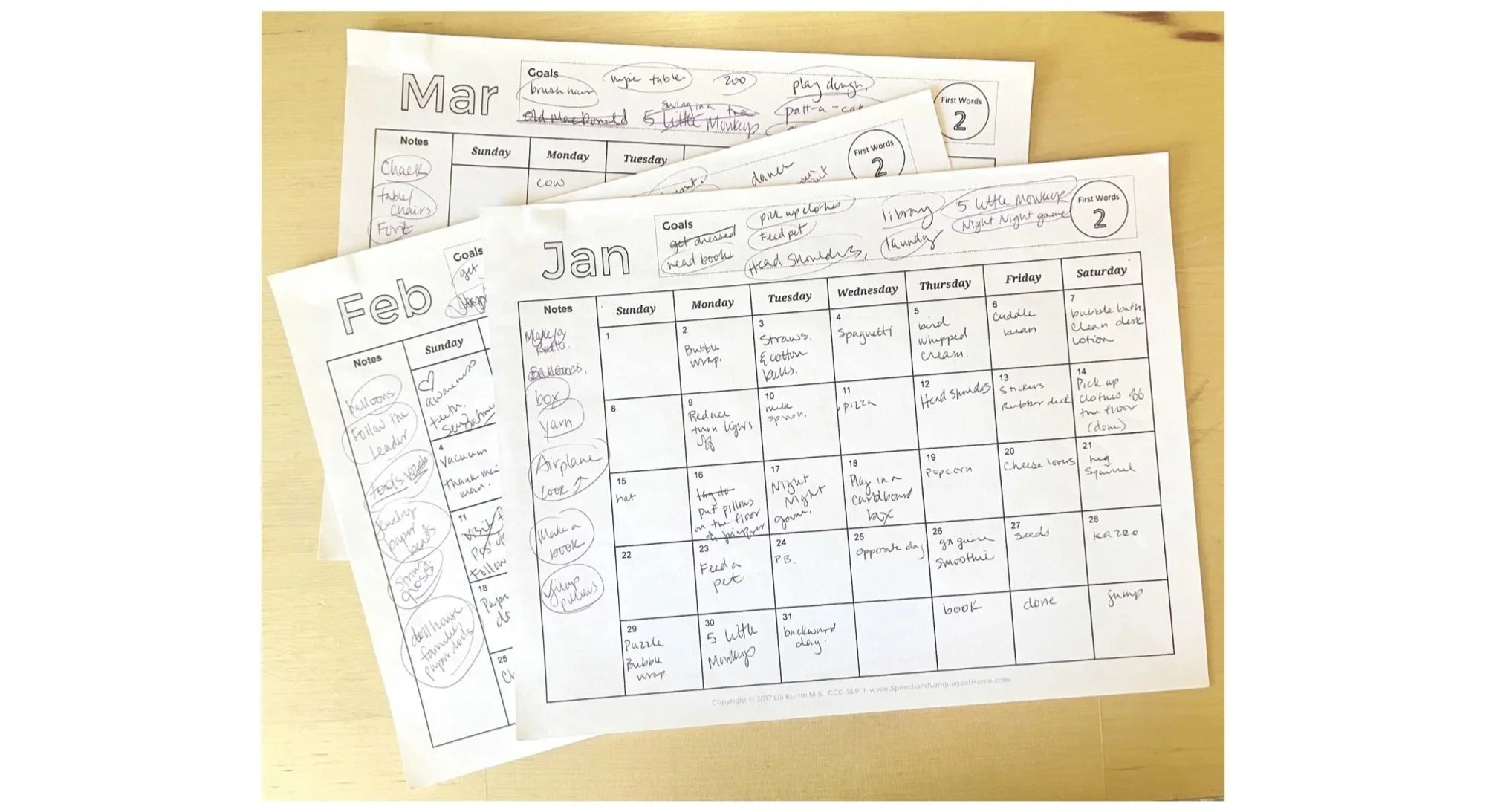
I worked as a speech-language pathologist in the schools for over 15 years before transitioning to home health. New to working with families (and the coaching model), I was looking for an easy way to share daily activities with families.
There wasn’t much out there, so I did a big brain dump of some of my favorite play-based activities, books, songs etc., and started filling in squares on a calendar.
It was immediately clear that having multiple sets with a range of skills would be necessary. One calendar became three.
I shared the first set with families at the beginning of 2017. It was such a hit I decided to include them in my small, but growing newsletter (April 2017).
They’ve been going strong ever since.
The calendars have evolved over the years and still continue to change. But overall, these simple daily routines have stood the test of time.
Three Levels of Language Development
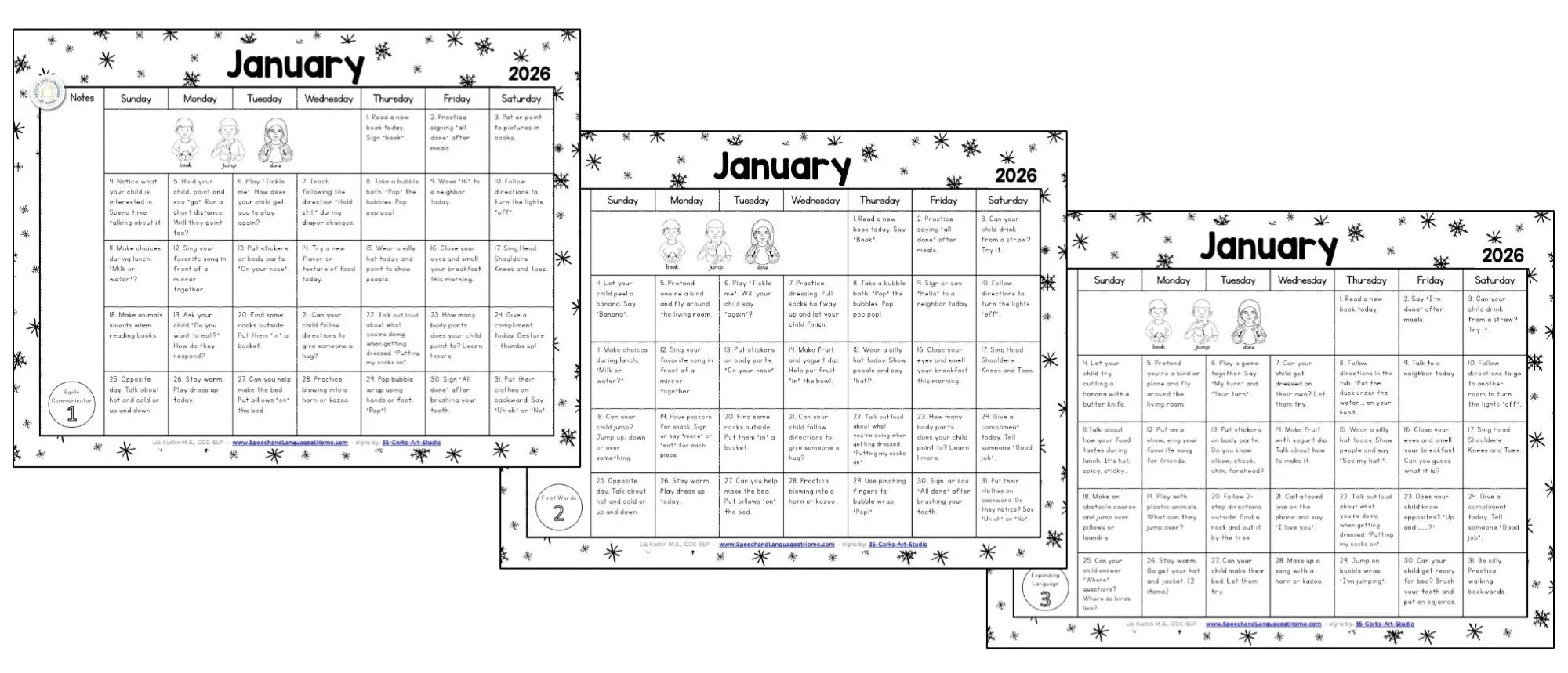
At first glance they may look the same, but flip between levels and you’ll begin to see how the same activity is adapted to meet kids at different stages of development. Here is how the levels differ.
Early Communicators
These activities focus on building foundational communication skills like joint attention, gestures, imitation, and turn-taking. Families are encouraged to model language, follow their child’s lead, and create opportunities for interaction.First Words
This level targets early vocabulary and helps children begin to use words (or signs) meaningfully. Coaching strategies such as encouraging repetition, labeling, and modeling simple, functional language are embedded into the daily routines.Expanding Language
These activities support children who are speaking simple sentences and are ready to expand their language. Families are guided to model new vocabulary, expand on their child’s understanding of language, and encourage more complex communication.
ASL Signs to Support First Words
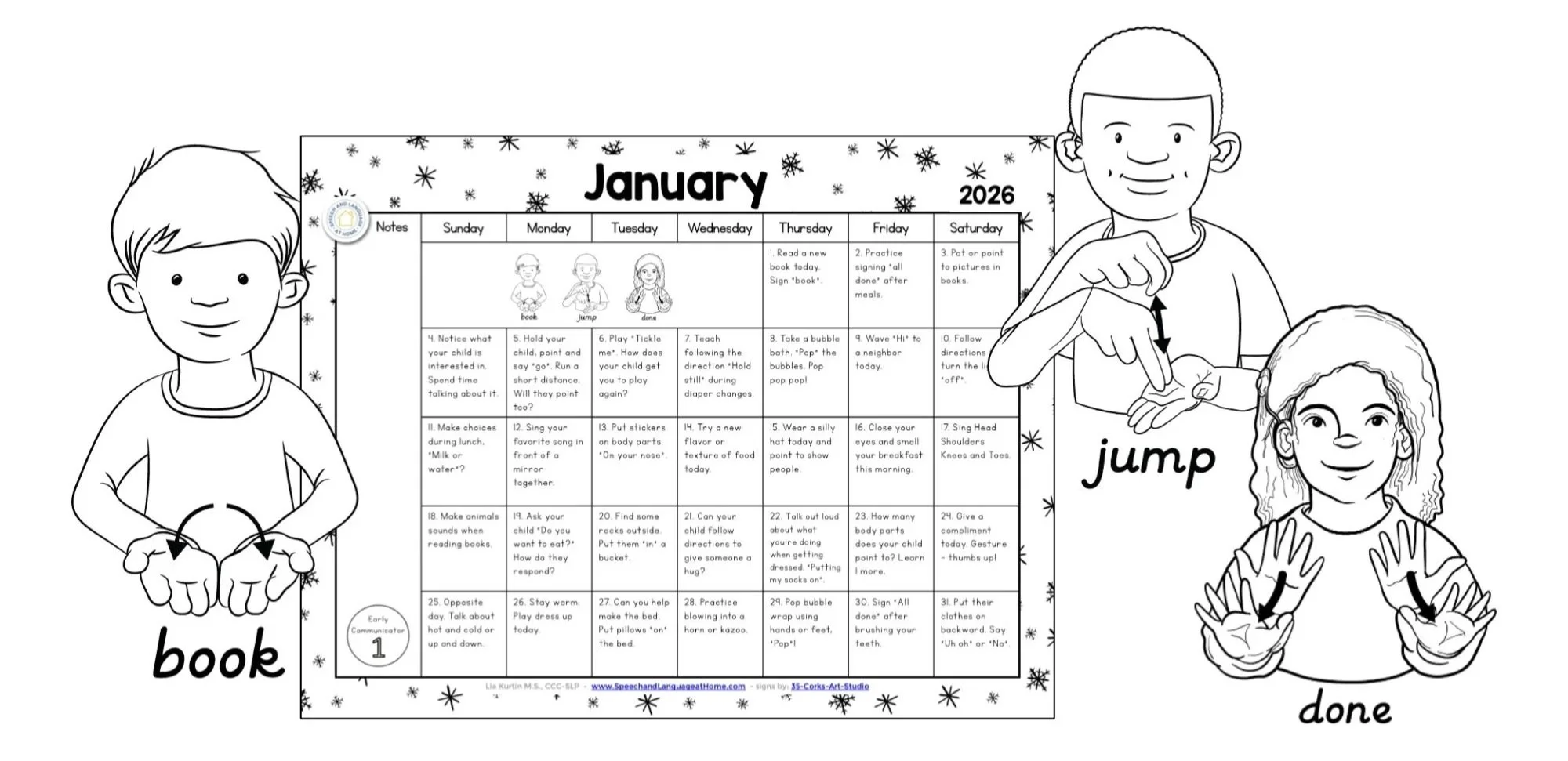
It was important for me to make the calendars as accessible as possible. I frequently incorporated signing in my sessions and wanted to include ASL visuals as another means of communication.
Each month provides 3-4 signs that overlap with common early first words.
These signs are easy for families to learn and can be used naturally during everyday interactions.
Why Use a Daily Language Calendar?
These monthly calendars are a great way to supplement individualized home plans.
I found families really liked having a reliable tool they could turn to month after month when they just needed a quick activity. Some are scribbled on and tattered by the end of the month, others are neatly hung on the fridge for daily view.
So what do I think they are so loved by families?
Simple, language-based activities centered around familiar daily routines.
Whether it’s talking about body parts while getting dressed or describing foods during meal times. These short, easy to do ideas are great for early communicators, toddlers learning their first words, and young children expanding their language through everyday experiences.
A daily calendar provides structure without overwhelming families.
English and Spanish Versions Available
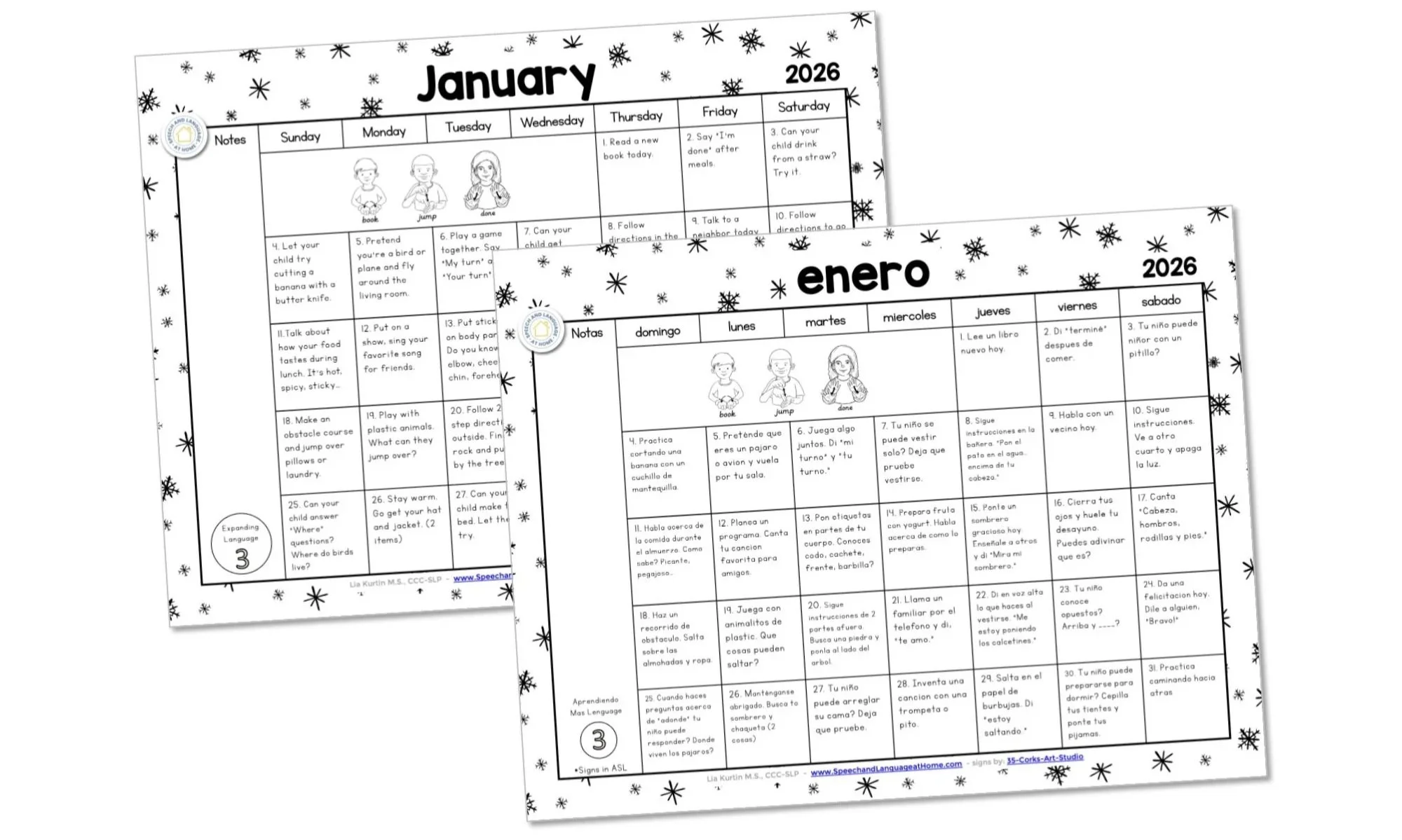
I’ve worked with many families who’s primary language was Spanish. It was important for me to give them access to these calendars as well.
I reached out to the bilingual SLP community and found multiple professionals qualified to help.
How to Get Your Hands on These Calendars?
Subscribers of my newsletter receive a new monthly calendar roughly two weeks before the start of every month. They are sent out again on the 1st of the month as well as uploaded to my Free Printable Library.
Download Your Free Language Calendar
If you’re looking for a simple way to increase family involvement and support communication at home, this is a great place to start.
Download the free Language Calendar and start using it with your students today.