
How Monthly Language Calendars Support Early Communication Skills
Monthly language calendars are a great way for families to support their child’s language skills at home.
The three calendars aren’t tied to specific ages, but rather language development levels. They can be used for children with early communication skills/preverbal through kids expanding their use of language in conversation.
This month, we’ll focus on the Level 1 calendar for early communicators.
Here are four ways you can use the monthly calendars for early intervention.
Reinforce daily routines
Embed strategies into activities
A resource for extended friends and family
A communication tool between caregivers and therapists
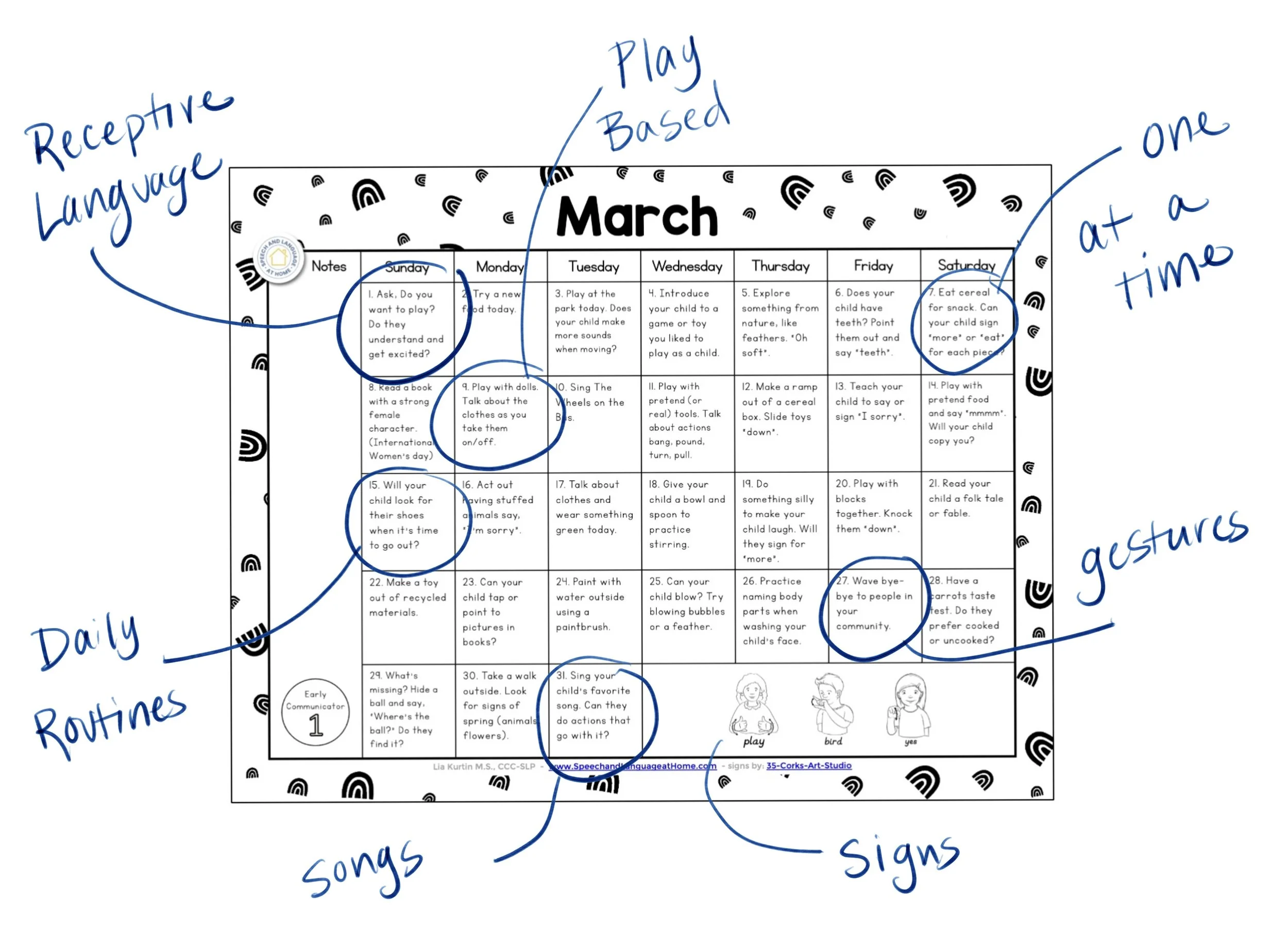
Using the Calendars to Reinforce Daily Routines
The calendar activities are embedded into daily routines that families are already doing. These may include routines such as snacks/meals, getting dressed, or bathtime.
In this example, a therapist could pair the goal of vocalization + the daily routine of play.
March 14th - “Play with pretend food and say, ‘mmmm’. Will your child copy you?”
This example idea can be discussed during a therapy session and expanded to more ideas for “getting noisy” during play.
Use plastic figures or stuffed animals to make animal sounds.
Pretend cough or sneeze when playing doctor
Vehicles such as cars, trucks, and trains are great for making zooming and crashing noises, “beep beep”, “bam”, “vroom vroom.”
Individualization comes in when a therapist knows what goals a family wants to work on and their daily routines. Find activities on the calendar that match these objectives to focus on.
Strategies are Embedded into Daily Activities
Early Intervention involves teaching caregivers strategies for building language skills at home. It is important to follow the family goals. These calendars can act as a jumping-off point for conversation.
Coach caregivers by saying, “Here are some simple daily activity ideas. Are there any that you would be excited to try or learn more about?”
If a therapist is working on the strategy of modeling, they can highlight a few examples on the calendar when/how to model that month.
For example, modeling body part vocabulary - “Practice naming body parts when washing your child’s face.”
Other strategies commonly embedded in the calendar include imitation, joint attention, repetition, and the use of signs to support verbal language.
Use the Calendar with Extended Family and Friends
A therapist’s job is to educate caregivers on how they can support their child between visits. Having a resource like these calendars is also useful for friends and family who spend time with that child.
Other people who can use the calendar may include:
sibling
grandparents
aunts/uncles
babysitters
daycare workers
other therapists
in-home nurses
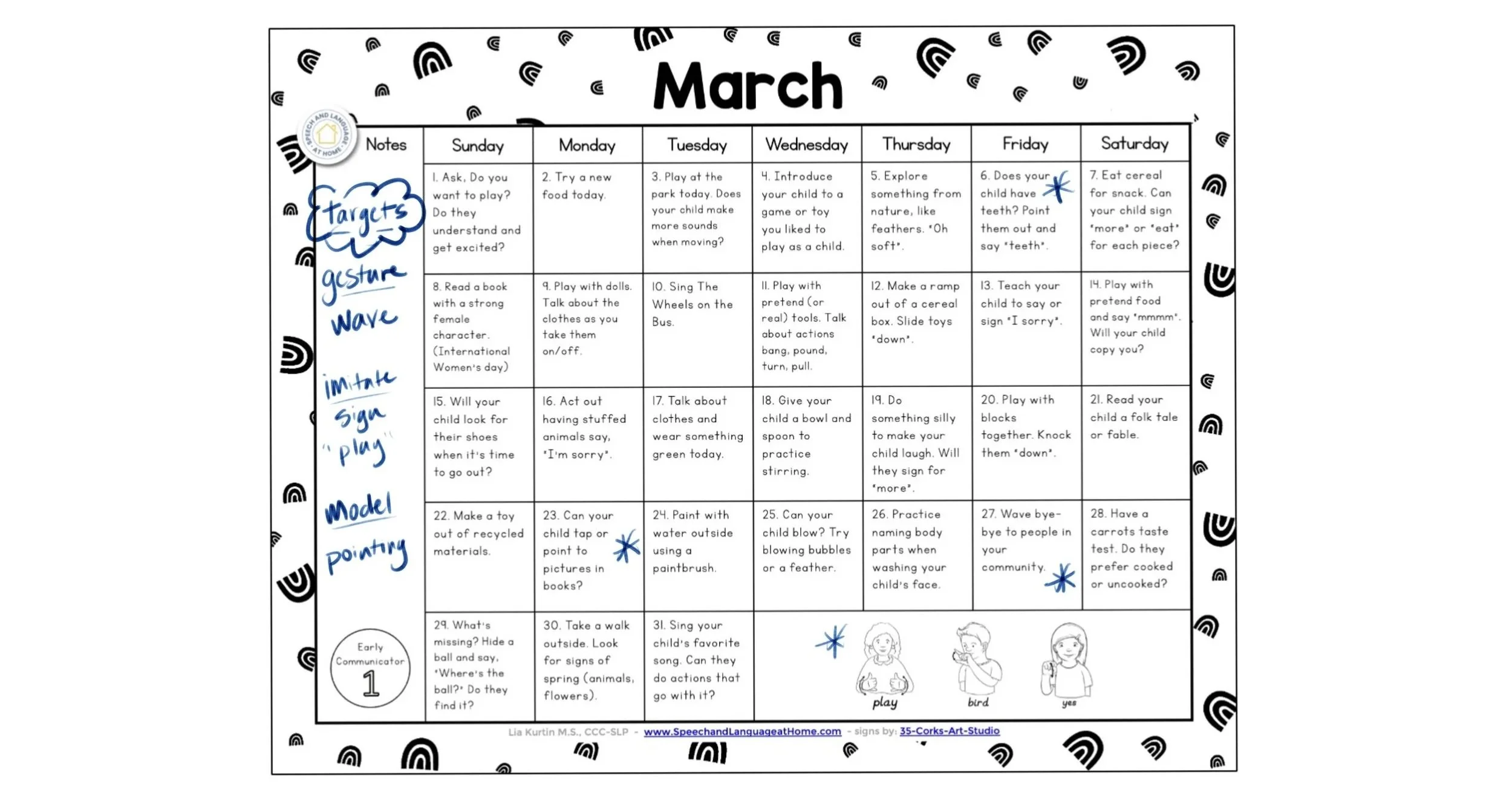
Using the Calendars as a Communication Tool
The calendars can be used as a tool or “home base” between caregivers and therapists.
They were designed to be a flexible tool rather than a recipe to follow strictly.
Cross things off. Add your own words. Mark them up!
Use the notes column on the side to add specific target words, brainstorm additional activities, or as a place families can jot notes/questions for the next session.
If you work in early intervention or have a child developing early language skills, sign up to download the calendars today.
Subscribe to the Newsletter
Join the newsletter and gain access to the Free Monthly Language Calendars and the entire Free Printable Library.